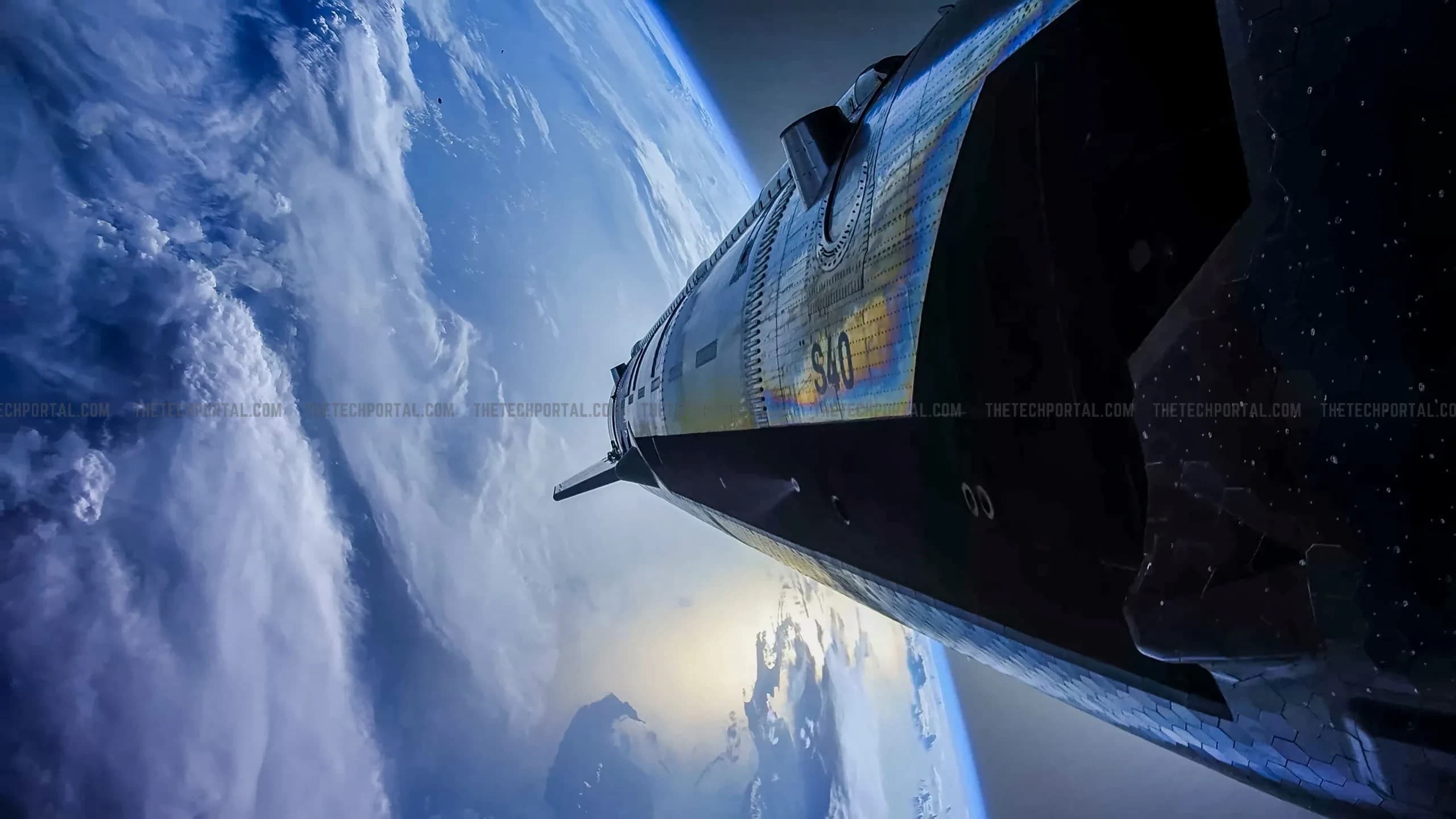
Starship reached orbit for the first time this morning. Flight 14 lifted off from Starbase, Texas at 7:46 a.m. CT, and this time the ship did not come down on a suborbital arc.
Ship 41 completed its circularization burn, reached low-Earth orbit, deployed 26 Starlink V3 satellites, and then burned to deorbit for a Pacific splashdown off the coast of Chile. Booster 21 splashed down as planned too.
Every one of the previous 13 flights was deliberately suborbital — a trajectory designed to guarantee reentry no matter what broke. Today required a second burn to push past 17,500 mph, the velocity at which Earth curves away beneath you and freefall becomes permanent.
That burn worked. And that single engineering fact separates the Starship program from every other heavy-lift development effort in history.
The stakes changed today as well. Those 26 V3 satellites are the first operational payload Starship has ever delivered, each carrying 1 terabit per second of capacity. The earlier 13 flights carried no commercial obligation. This one did — and it completed the deliverables.
Zoom out and the business logic snaps into focus. Starship was always the keystone for two empires: Starlink's next-generation constellation and NASA's Artemis moon program, where Starship is the contracted Human Landing System for Artemis V in 2028.
Neither ambition was moving without orbit. Artemis needs orbital propellant transfer before any crewed lunar landing — the ship has to be refuelled in space to leave for the Moon. Today's flight is the capability that unlocks every test after it.
Rhetorically, people have mocked the explosion-heavy test campaign for years. The counterargument is sitting in the numbers: SpaceX has launched 100 missions in 2026, and treated 13 Starship flights as data collection rather than failure, even when vehicles disintegrated.
That cadence is the actual moat. Every competitor building a super-heavy rocket during the same period has been iterating on paper while SpaceX iterated in flight. The mistakes compound into real hardware faster.
The achievement also resets the competitive math for Kuiper, Blue Origin, and every operator betting on multi-year lead times in broadband capacity. A single Starship flight just added 26 Tbps of new satellite capacity in one mission.
So the moment deserves its framing: the SpaceX method — build fast, fly fast, learn fast — has produced the largest flying object ever to reach orbit, and it commercially delivered on attempt 14.