Fal has raised $1.3 billion in a Series F led by Bessemer Venture Partners, valuing the generative media infrastructure company at $16 billion. The financing, completed in October and reported by Bloomberg on November 3, doubles Fal's valuation from the $8 billion it reached in April.
NVIDIA participated as a strategic investor. Sound Ventures and T. Rowe Price Group also joined the round, according to Bloomberg.
The announcement also brings Fal's earlier Series E into view. Sequoia Capital led that round, which closed earlier in 2026. The April financing was reported at $350 million. Together, the two 2026 rounds represent $1.65 billion in new capital.
The valuation increase comes alongside a sharp rise in revenue. A source familiar with the company told Bloomberg that Fal reached an annualized revenue run rate of $800 million this year.
At that reported pace, the $16 billion valuation represents approximately 20 times annualized revenue. The $800 million figure is not audited annual revenue, and Fal has not publicly disclosed the margins or profitability behind it.
That distinction matters. Fal sells infrastructure whose revenue grows with usage, but each image, video or audio generation also consumes computing capacity. The economics depend on how efficiently the company can serve requests, manage GPU costs and keep its infrastructure running at scale.
Fal gives developers access to more than 1,400 image, video, audio and 3D model endpoints through a single API. Instead of integrating each model separately and managing the infrastructure required to run it, developers can access models through Fal's platform.
The company also offers serverless inference for customers deploying their own models and dedicated GPU compute for training and other demanding workloads. Its platform supports more than 2 million developers and teams, according to its current product information.
The business operates on usage-based pricing. Customers pay per generated output or GPU time, while custom deployments are billed according to the time their GPU runners are active. That structure connects Fal's revenue directly to production workloads rather than relying primarily on software subscriptions.
Companies using Fal include Adobe, Canva, Shopify and Perplexity. The platform also serves independent developers and AI-native businesses building products around generative media.
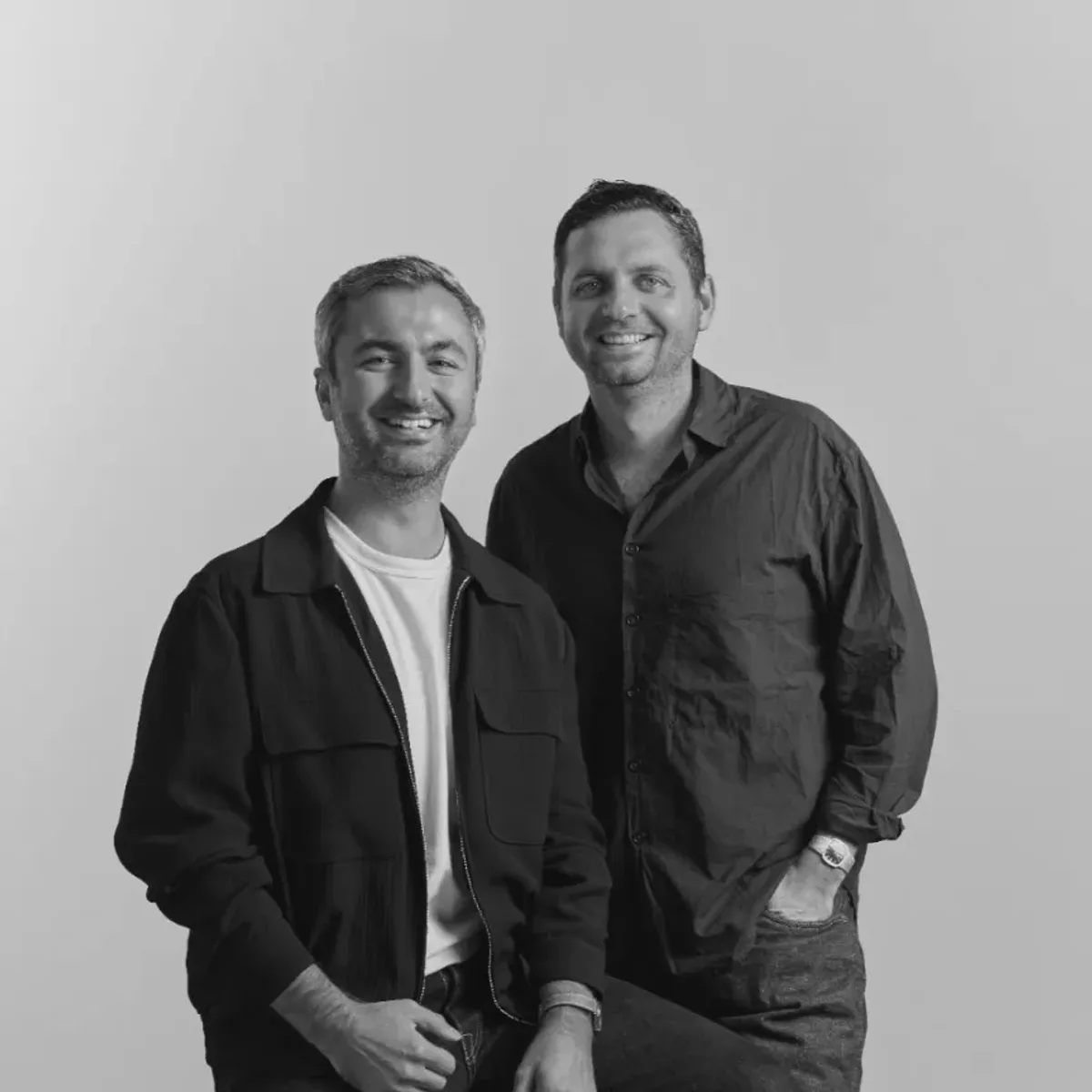
Burkay Gur and Gorkem Yurtseven founded Fal in 2021 after working in AI and infrastructure at Coinbase and Amazon.
The company did not begin as a generative media platform. Its original focus was scaling compute for Python workloads. That changed when image-generation models such as Stable Diffusion began gaining traction in 2022.
The founders saw an infrastructure problem. These models could produce compelling images, but running them quickly and reliably was difficult. Fal began optimizing inference performance and giving developers access to the models through its platform.
The company later expanded from image generation into video, audio and other forms of generative media. In its July 2025 Series C announcement, Fal said its revenue had grown 60 times over the preceding 12 months.
Fal's position is different from that of a company building a single foundation model. It sits between model developers and the businesses deploying those models, providing access, inference infrastructure and the capacity to run workloads in production.
That position becomes more valuable as new models appear across the market. Developers can switch between providers without rebuilding their infrastructure around every release, while model creators gain another route to distribution.
But the business also faces a demanding infrastructure problem. Faster models, lower latency and competitive pricing require access to GPUs and the ability to use them efficiently. The company needs enough capacity to absorb demand spikes without allowing hardware costs to erode margins.
The same race is attracting capital to other inference providers, including Fireworks AI, Baseten and Modal. Competition will depend on more than the number of models available. Cost per generation, reliability, latency and access to compute will determine which platforms can support large production workloads profitably.
Fal's latest financing is a bet that generative media will become a significant production workload across advertising, commerce, entertainment and software. At a $16 billion valuation and a reported $800 million annualized revenue run rate, investors are pricing the company as a major infrastructure layer in that market.
Whether it can turn that scale into durable margins is the next question.
Sources: Bloomberg · Fal: About · Fal: Inference platform · Fal: Series C · Sequoia · Fortune