
AMD agreed to acquire World Labs, the artificial-intelligence startup founded by Fei-Fei Li, for $8.2 billion in an all-stock deal. Li is a Stanford professor whose work helped create ImageNet.
The deal was announced Monday and is expected to close by the end of 2026, pending regulatory approval. Founded in 2024, World Labs has roughly 70 employees. The size of the transaction suggests that AMD is buying a team and a product vision as much as it is buying the technology.
World Labs develops world models. Instead of predicting only the next word, these systems try to represent three-dimensional environments, estimate how objects move, and predict what happens when a scene changes. Li calls the capability spatial intelligence.
The intended applications include robots, autonomous vehicles, drones, and industrial machines. Those systems have to interpret the physical world, deal with uncertainty, and choose actions. Recognizing text or images is not enough.
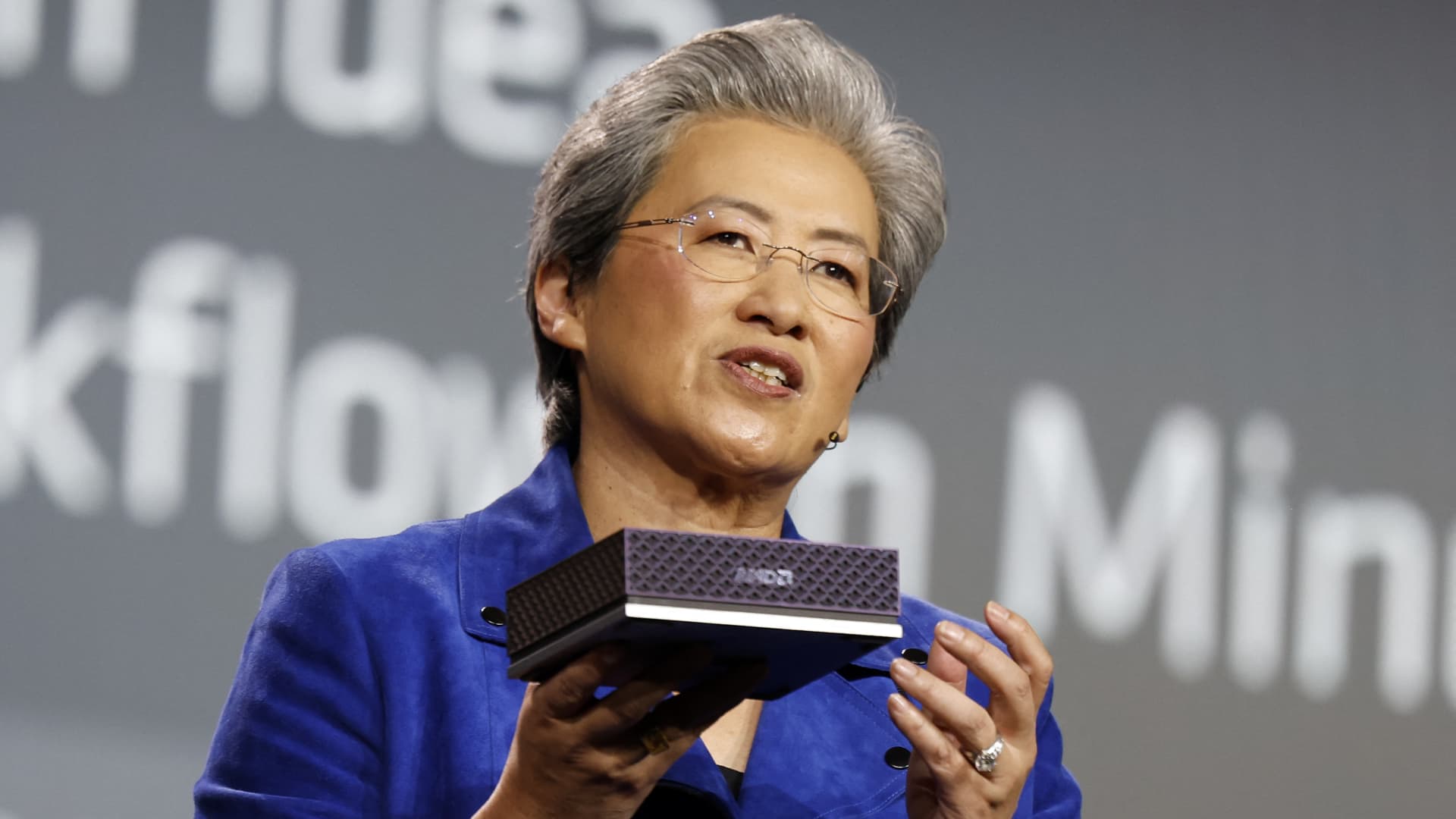
Under the agreement, Li will become AMD's executive vice president and chief scientist, reporting directly to CEO Lisa Su. Justin Johnson and Ben Mildenhall will continue to lead the World Labs team inside AMD.
Su told Bloomberg Television that the acquisition would combine the team Li assembled with AMD's capabilities in hardware, software, and systems. The chipmaker is moving deeper into the research and tools that shape how AI is built.
For Li, the deal addresses a practical problem. World Labs raised $1 billion earlier this year from investors including AMD, Nvidia, Fidelity, and Autodesk, but training world models requires substantial computing power. The combination gives the startup more direct access to hardware and infrastructure.
The purchase also gives AMD an earlier view of the workloads that could reach data centers in the next few years. If world models gain traction, the company can adapt its accelerators and software before the market becomes mature.
Chipmakers are moving into areas once dominated by research labs and software companies. Nvidia has expanded into models and developer tools. AMD is now trying to build its own position by combining accelerators, systems, and applied research.
The acquisition broadens AMD's model portfolio and could include both open and proprietary projects. It also changes the company's pitch, from a silicon supplier to a provider of a more complete AI platform.
AMD is making the purchase after a sharp rise in its stock. Shares nearly tripled in 2026, briefly pushing the company above a $1 trillion market capitalization. The challenge now is turning an expensive acquisition into products that justify the price.
The World Labs deal puts AMD closer to research that could shape the next generation of robots and autonomous machines. Its success will depend on whether the company can turn an advanced research team into technology that works at scale and reaches customers.